In This Article
Are you planning on shucking oysters in preparation for a large gathering? Are you sick of eating cooked oysters by using the heat method? Do you want to know the best oyster knife or even knives for the job? This article is here to help.
As most of us already know, oysters are extremely expensive. And to not be able to enjoy your oysters like how you would find them at any high-end restaurant. It is a complete buzz kill.
There’s an ongoing debate that has been going on for many years now. And that is whether you should eat oysters raw or cooked. In my opinion, I say both options are delicious. Depending on what meal you are planning to prepare. But I do prefer my raw oysters more.
- How To Clean Your Oysters
- The Best Ways To Open Your Oyster and How To Shuck With Ease
- The Equipment You Need for Shucking Oysters With an Oyster Knife:
- How To Choose the Right Oyster Knife and Oyster Knife Types
- The Type of Oyster Knives:
- The Knives I Recommend Buying:
- How To Top and Serve Your Oysters
- Recommended Oyster Gear

- How To Clean Your Oysters
- The Best Ways To Open Your Oyster and How To Shuck With Ease
- How To Choose the Right Oyster Knife and Oyster Knife Types
- How To Top and Serve Your Oysters
How To Clean Your Oysters
When it comes to eating these delicious shellfish, we must first prepare them, which means you have to clean them. Cooked or raw, the rules apply. Why should you clean your oysters? Oysters tend to collect sand, dirt, debris, and in some cases, oysters suck in harmful bacteria or viruses within their shells from the ocean and can cause food poisoning if the oysters have not gotten cleaned correctly. The first step into cleaning your oysters is to inspect them. You have to keep the oysters alive until they’re ready to be shucked. That means throw out any oysters that have opened, have a cracked shell, or when shucking, don’t snap themselves close. After sorting through the good and bad oysters comes time to clean. Grab a colander and grab any bristle brush you can find. Run the oysters under cold water and begin cleaning any dirt and debris off the shells. Make sure not to forget the creases. If you find any “bad” oysters, chuck them in the bin.The Best Ways To Open Your Oyster and How To Shuck With Ease
Opening your oysters can be a tricky business and is extremely dangerous to attempt without the proper equipment. After all, the oyster is still alive and will put up a fight when you’re trying to pry open its shell. It is easy to slip and accidentally cut yourself. So, using the methods below will decrease your chances of injuring yourself. There are many different ways to open up your oysters, and it will all depend on how you want them cooked or prepared. For cooked oysters, you could try microwaving the closed oyster shells for just under a minute. The oyster shell should pop open. Another method for opening your oysters when cooking them is to cook them in the oven. For raw oysters, unlike cooked ones, you want to stay away from any heat possible. This method will keep your oysters fresh and lively. The best options you have is prying the shells opening them with a shucking knife, or if you don’t have one, try using a flathead screwdriver or a paring knife. You can read how I first was afraid about shucking oysters hereThe Equipment You Need for Shucking Oysters With an Oyster Knife:
- An oyster knife that best suits your oysters
- Mesh glove/s
- A towel
How To Choose the Right Oyster Knife and Oyster Knife Types
When it comes to purchasing oyster knives, it can be hard to find what knife best suits your oyster’s needs. And the best knife that avoids you from injuring yourself. As with any knife, the oyster knife, also known as a shucking knife, comes in many different shapes and sizes. As with all creatures of the sea and land, oysters vary in sizes. These sizes will also depend on where in the world the oysters get found.The Type of Oyster Knives:
Providence Oyster Knife
The Providence oyster knife has a blade length of 7cm. The blade itself is quite blunt, although it has a curvature tip that is quite sharp to the touch. This knife gets often used to open small or medium-sized oysters from the hinges.
Boston
The Boston oyster knife. Or, often referred to as the Boston stabber. The Boston stabber has two options of blade lengths 9cm or 10cm. This knife has a sharper and narrower point than the Providence oyster knife and is often used to open most types of oysters from the sides rather than their hinges. You’ll also notice that the handle is much smaller.
New Haven
Like the Providence oyster knife, the New Haven oyster knife has a blade length of 7cm. The tip of this knife has gotten angled slightly to prevent wrist strain. And it also helps prevent accidentally stabbing the oyster meat with the blade.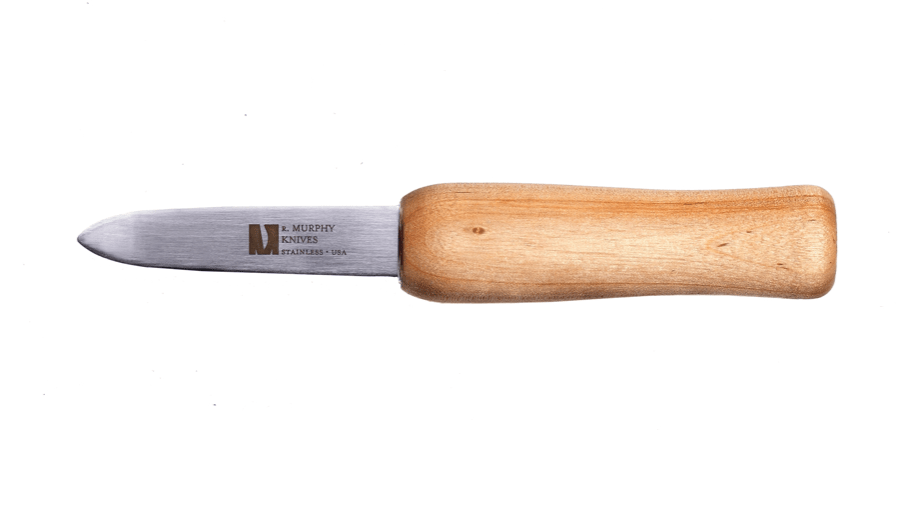
Galveston
The Galveston oyster knife is similar to the Boston knife. However, this knife has a much wider blade length, and the tip is not as pointy. The Galveston oyster knife is fantastic for medium to large-sized oysters.
The Knives I Recommend Buying:
If you are into shucking oysters as a hobby or profession, I recommend purchasing all these knives. But, if you are a home cook wanting to prepare some oysters. I would first say make sure you check the size of the oysters in your location. You don’t want to be buying the wrong knife for the job. Or, another option would be to purchase the Boston knife. The Boston knife works on most oysters. The only downside is you may risk puncturing the oyster meat if it is a small-sized oyster. As for the brands, I quite like the brand Dexter Russell and Melocean. Dexter Russell oysters knives can get found in many retail and online stores. Melocean can get purchased on amazon and some retail stores.How To Top and Serve Your Oysters
Onto our last topic of the article, we have how to top and serve your oysters. These toppings are a personal preference, I’m not saying that this is how you must top and serve your oysters, but they are ways to bring out the best flavours that your oysters can give. If I am preparing raw oysters, I like to have an array of different flavours. This array is also a good idea for gatherings as you wouldn’t know how everyone eats their oysters, but this way, you can satisfy them with intriguing flavours they cannot resist. My favourite oyster toppings include doing tropical fruit topping, Asian-style, Italian-style, Mignonette dressing and sometimes a spicy dressing. As for cooked oysters, I do love the combination of pasta and oysters together. My favourite cooked oyster recipes has to be lemon linguine with smoked oysters or even oysters Rockefeller. Tip: Always place your raw oysters on a bed of crushed ice and rock salt. That concludes my article on how to choose the right oyster knife. I hope that it has helped you understand what each type of knife gets used for. And I hope that it helped you make a choice which blade suited your oyster type. I also hope the other topics help you keep your oysters as fresh and delicious as possible. Enjoy. Also, Check my Recipes page and other posts like KaDeWe oyster bar in Berlin Things You Probably Didn’t Know About oystersRecommended Oyster Gear
Want to serve oysters at home like a pro? You’ll need a solid oyster shucking knife (I use the R. Murphy New Haven), a cut-resistant glove, and a good oyster serving plate. See my full guide to the best oyster shucking knives.
This post contains affiliate links. See my affiliate link policy.
Keep Reading
About the Author

Piret Ilver
Piret is the founder of HowToEatOyster.com and has spent years exploring oyster bars, shucking at home, and learning from master shuckers across Europe and North America. What started as a personal quest to overcome a fear of raw seafood turned into a passion for sharing oyster knowledge with beginners and enthusiasts alike. Every article is based on hands-on experience, research, and a genuine love for the craft of oyster appreciation.